The Little Missouri National Grasslands is over a million acre park spanning from Alexander, ND down to Medora, ND, with a few sub-plots over in Keene, ND called the Blue Buttes. Nestled inside it is the Theodore Roosevelt National Park that has three units to do an activation within (North Unit, South Unit, and the Elkhorn Ranch Unit–US-0065). The Grasslands are mostly wide open prairie within the rocky terrain of the Western North Dakota Badlands, consisting over open land to breathtaking Butte ranges. Be mindful, however, of oilfield traffic and grazing cattle; and also not to mention the Elk and other wildlife out here.
There are patches of private land within the BLM/National Forrest areas, and most are clearly marked, but some aren’t. There are map tools to figure where public and private land are.
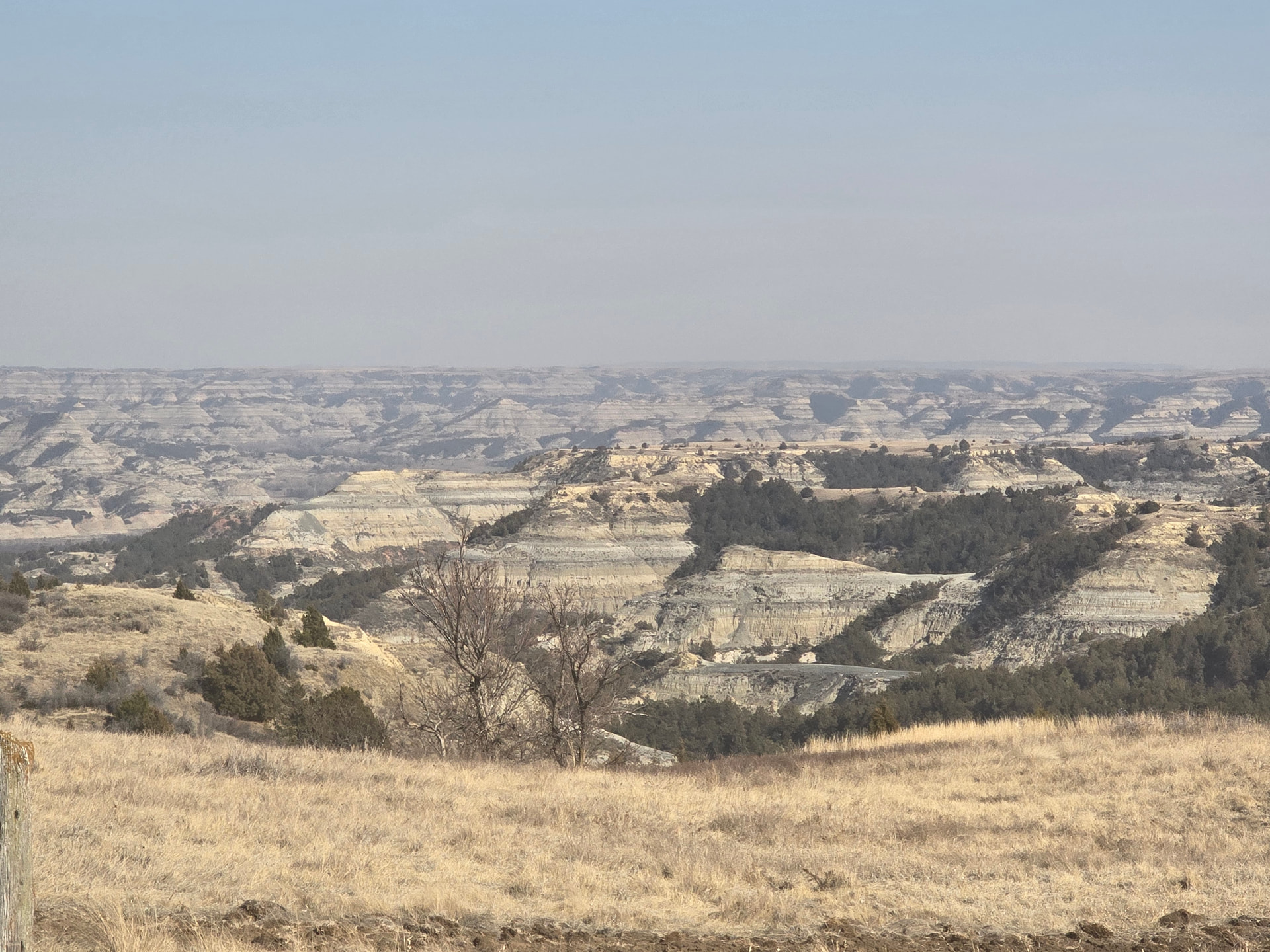
(The North Dakota Badlands)
SOTA W0D/ND-026
Western North Dakota also has a good number of SOTA sights, with a few located inside the park. I had chosen one (ND-023) that was a tall Butte to attempt a climb, but abandoned the idea as it would have been a long hike to get here (and I’m not in the total best of shape to ruck a heavy pack and kit just yet). I traveled to my alternate at ND-026, going without knowing what to expect. A two track trail lead up to the GPS point but I stopped before the summit and walked up to check to the top only to find a pick-up at the top.
Summitted with the F-150 and began my setup for both of my activations. This was my first SOTA activation ( I am to pack mule to one in the Grasslands one day), and this day I elected to try a new antenna: The Rybakov.
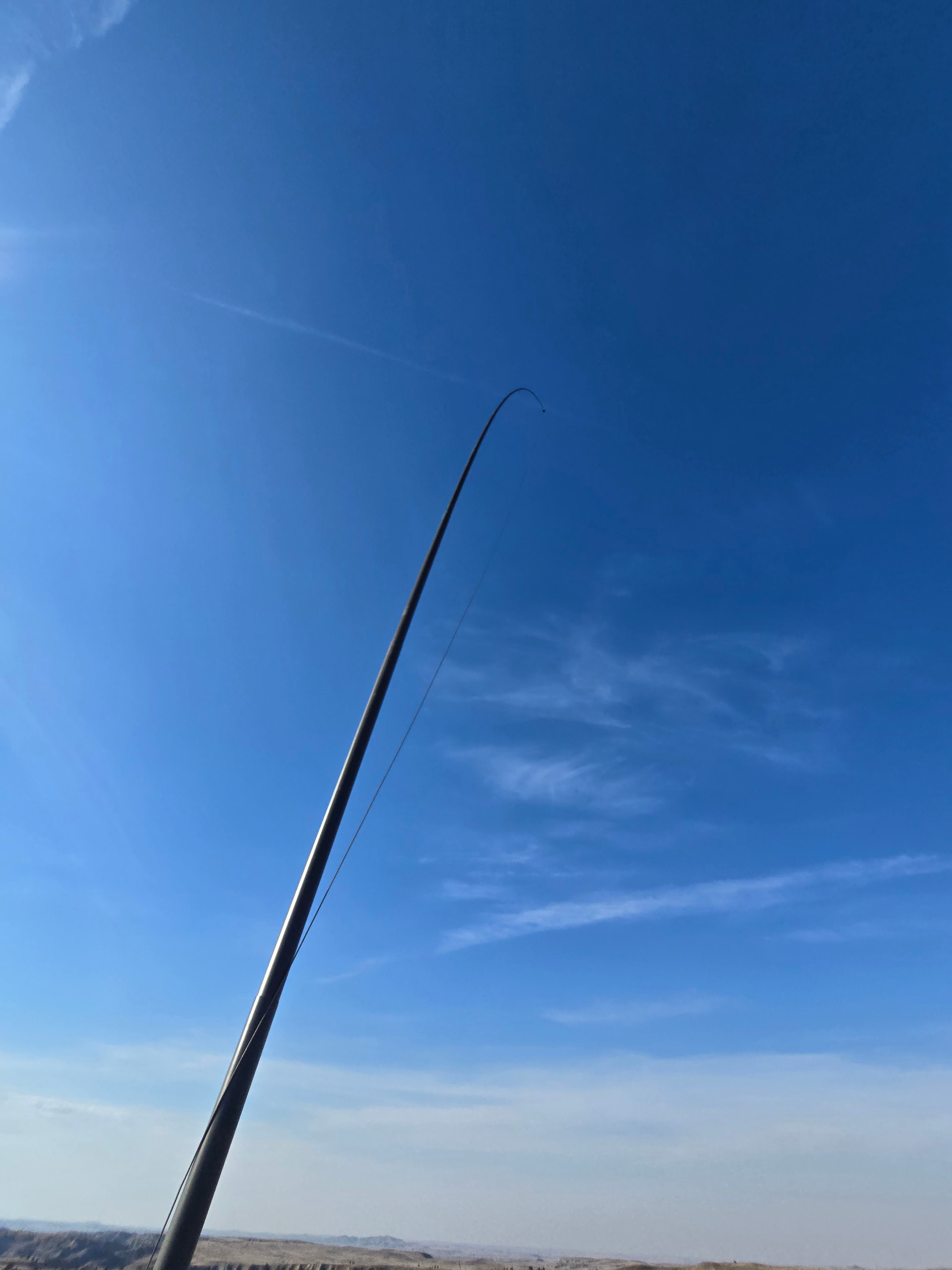
(Gone fishing…for contacts)
Going off of Salty Walt’s Portable Antenna Sketch (though I missed a few elements) I wanted to try something different for the driven element. At my work, I haul crude oil from the wells out here in the Bakken Shell Formation. One big rule is we ground our trucks with a 50’ spool of stainless steel braided wire. As it happened, my ground cable suffered a malfunction to the respooling spring, so the whole unit had to be replaced. Instead of trashing the old ground, I salvaged it and cut the 25ft length from it, placing a banana plug at the end.
Utilizing a LDG 4:1 UNUN (thankful they are banana plug friendly), and a 10M DX Commander Classic mast supported by my step deck and handrail, I attached the braided steel cable with a carabiner at both loops and rose it up to full height. Attached one ground wire to it (that’s the element I missed was to have more radials), then the UNUN at the pole. Hooked it up the G90, powered it one, and was greeted with a clear signal on 20M. The noise floor level was much quieter than when I run a standard copper wire, or my vertical.
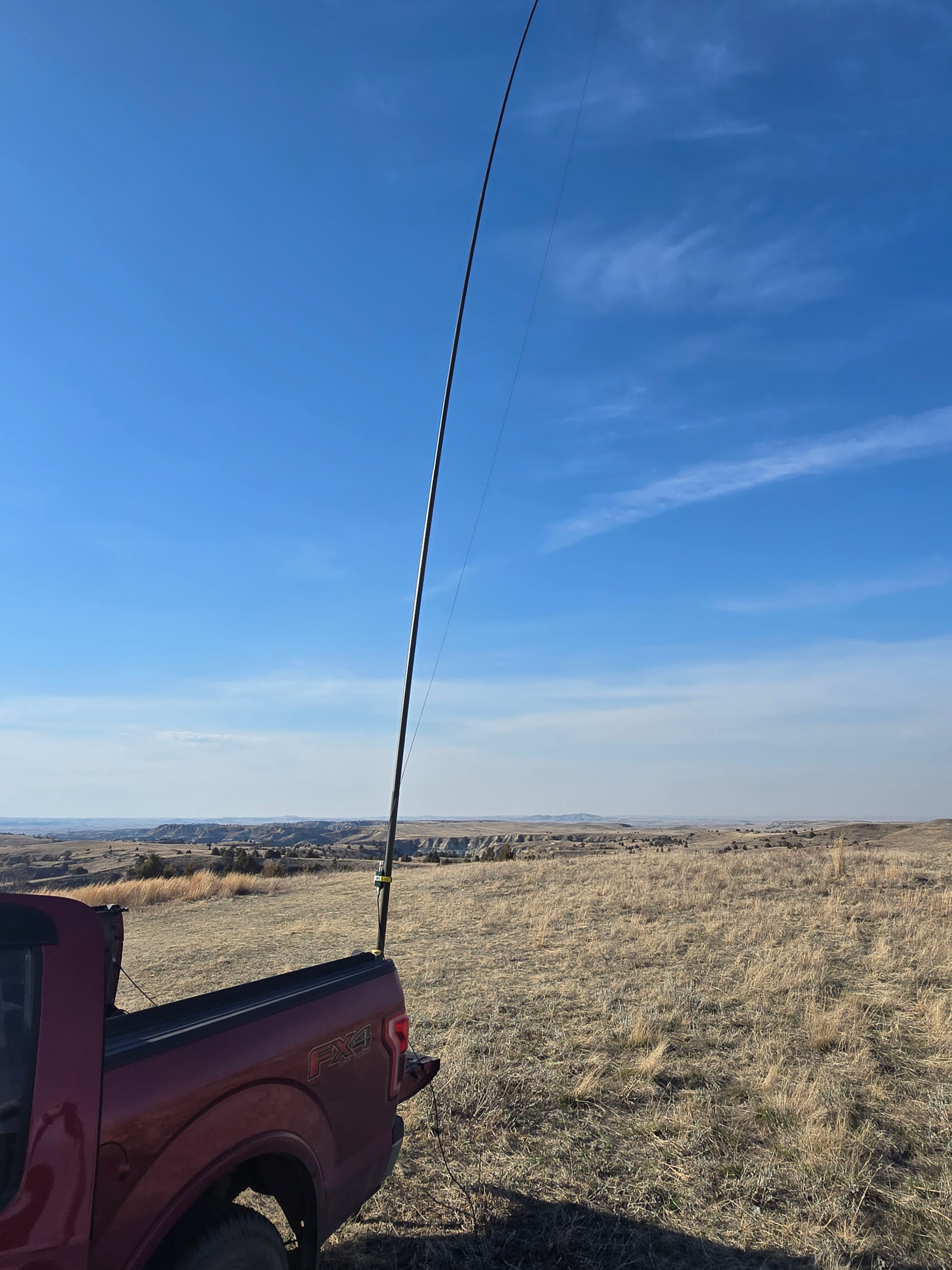
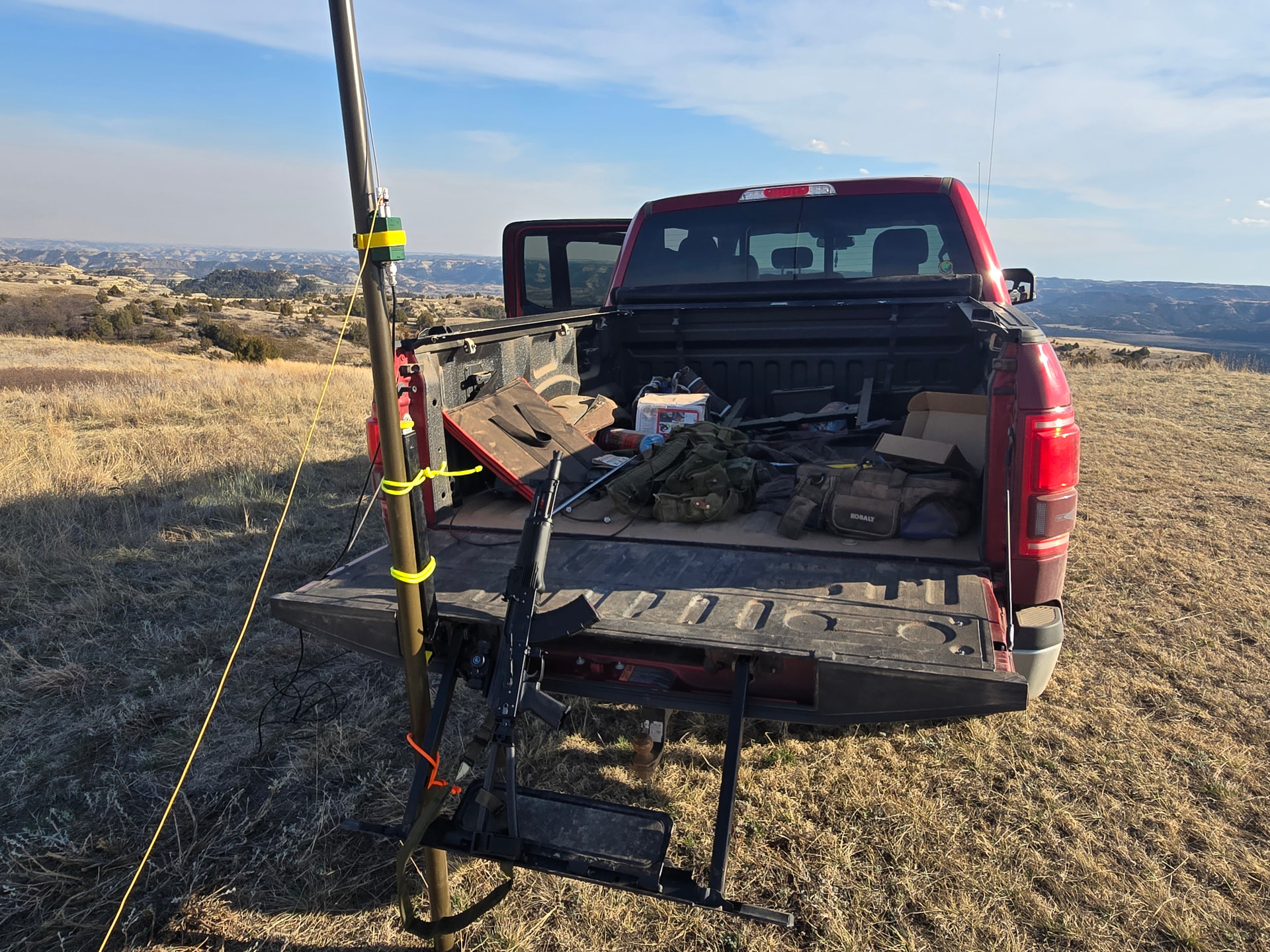
(My Rybakov setup).
Activation Operations
First mode was FT8, using the G90s incredible tuner, and started searching for contacts. Made two on 20M first, then transitioned to 17M, then 15M. I found the antenna did not like 17M that much through the G90’s SWR scan, but 15M was dead on. Made only one contact, and that was V4/SP9FIH out of Nevis Island.
Alter, I switched back to 20M, sent out a SOTA CQ (which attracted a lot of FT8 contacts), then went to SSB.
After spotting myself on POTA and the SOTA, I fought pile-up after pile-up (also didn’t hurt was a QSO part weekend). I managed to log 66 contacts in under an hour using the Rybakov antenna with the stainless steel element.
Later, I switched back over to FT8, managing contacts while prepping my evening meal (dehydrated chicken fried rice).
During this, the owner of the other pick-up showed up and had a chat with him. Area was public land, but further south was private. He showed me a trail that went out to steppe plateau I was wanting to go down with my vertical, but I didn’t feel I’d have time to make it back before sundown. Maybe next time.
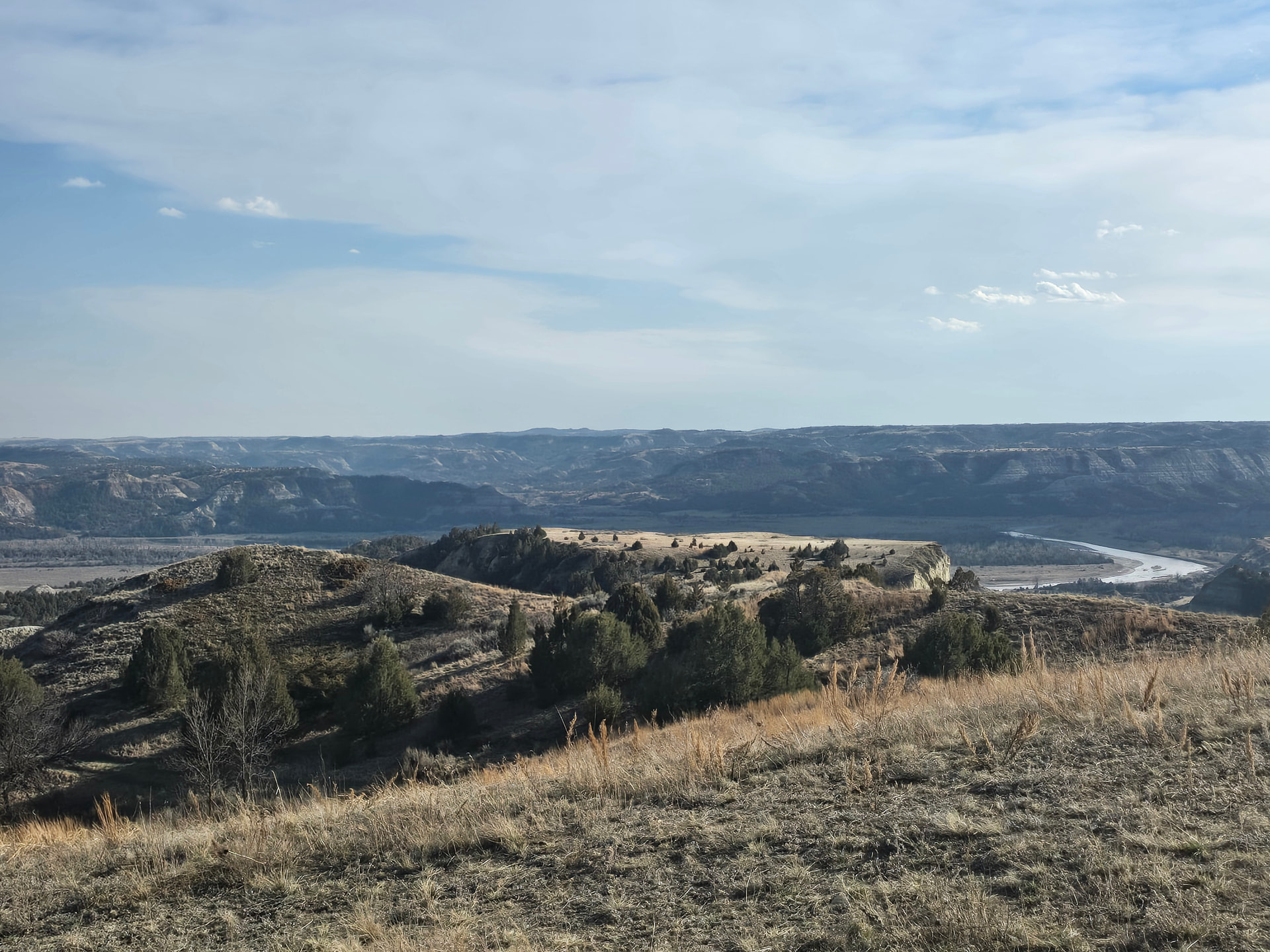
(The plateau I want to pack mule to and setup on the ledge. The Little Missouri River is the background)
Breathing Deep in the Gathering Gloom
But I wasn’t watching lights fading from every room, but seeing the coming night sky and stars. What is nice being this far north is the sun finally winks out around 9. I still plugged on with FT8 before switching to hunting other active POTAs on SSB and CW.
One I happened to find, but wasn’t able to make contact where three Alaska stations at a single park(s). I tried and I tried, then I heard the DX Commander mast come down. I had some high gusts arrive throughout the day, and more came at night. It must have loosened the mast to the point I had to do some surgery as one pole section lodged itself into another. Fixing it and getting the antenna back up, the Alaskan stations went QRT.
Also discovered why I couldn’t get them the first few tries. No wattage was going out as I had failed to switch from U-D to USB.
…Groovy…
I did have an Alaskan station hunt me down, so it wasn’t all lose, but no Park-to-Park.
Made 3 CW contacts, but by then it was approaching 11. Lowered the mast, disconnected the antenna and packet it up. (Doing this and driving in the back country in the dark doesn’t bother me. Did night shift out here in a big truck. Yet, the wife thinks I’m nuts).
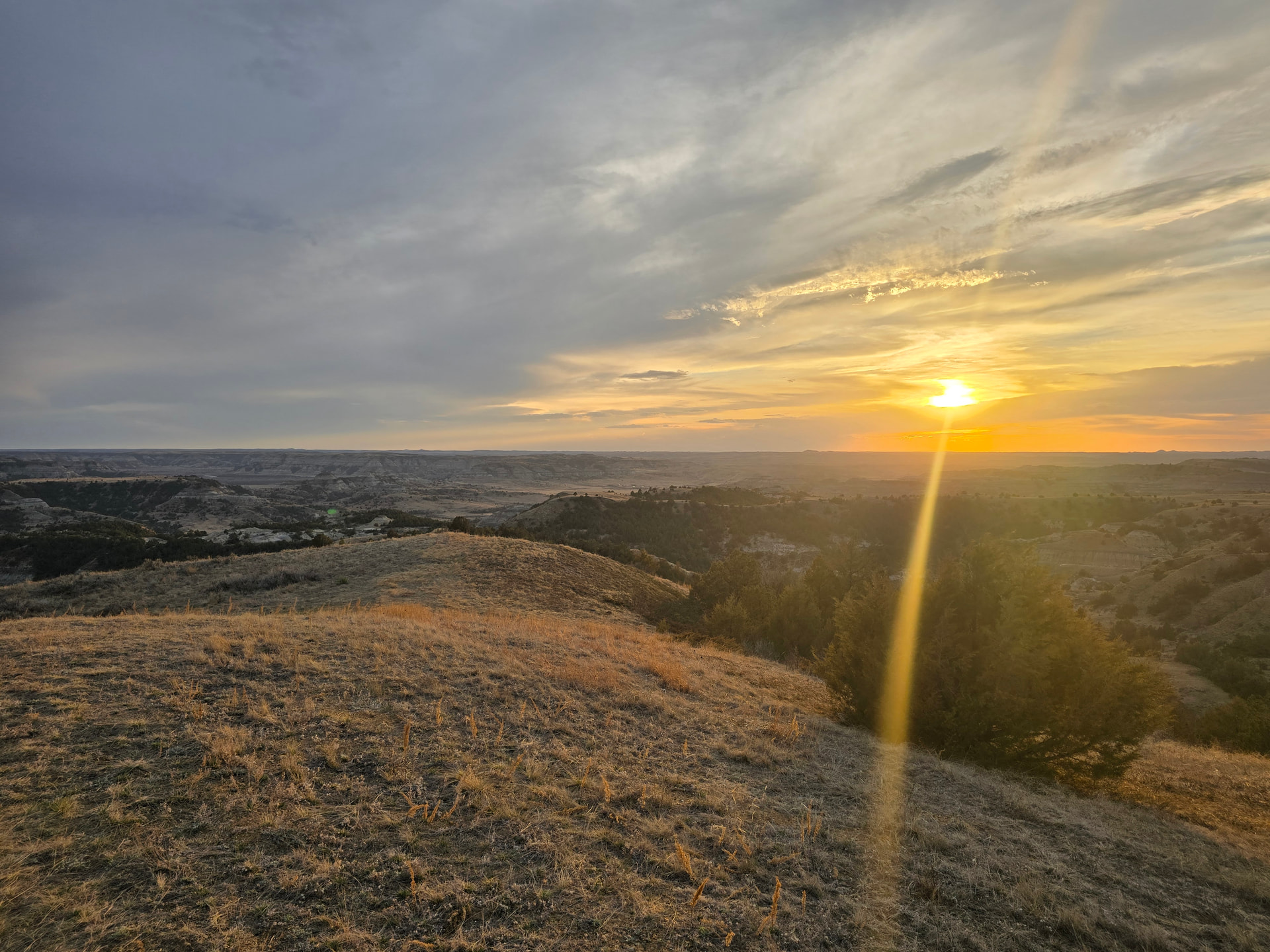
(The sun setting at 8PM)
Thoughts and Lessons
I’m impressed with the Rybakov setup. I do need to make a few more radials, get the UNUN lower to the ground to try and get the radials off the deck for a more efficient signal. But the braided stainless steel cable was a surprise in how well it worked. I had some stations hitting it hard on my end, but also was getting some weaker signal reports back. I’m not sure if that is due to the 20watts of the G90, or just I “skipped” a few elements in the antenna construction. I did get a lot of New Mexico, Missouri, North and South Carolina contacts, which have been a hard phenomena out here.
There is a reason North Dakota is a hard state to get contacts in both direction. The Midwest is generally a hard spot, but North Dakota has its unique challenges; especially Western ND. For one, the Badlands is a weird when it comes to skip. Some days or bands, Colorado and California comes in great. Other times, I skip right over. Montana and Wyoming have been silent for me on HF. That’s not to say I’ve done some great DXing out here, making SSB contacts with France, Britain and Italy. However, me and another HAM out here have found we don’t get a lot of DX from the North of us. It’s all south and east and west.
This fact is also why when I spot myself for SSB mode, I’m guaranteed a good pile that can last for a few hours on a good day. I have had several stations thank me as I was the last state they needed for their 50 state award. I aim to please!
As for the DX Commander. Right now I view as temperamental out here. Most users I’ve read or chatted with who have it say they using regularly in high winds, but our cautious, sometimes not deploying it for heavy winds. My issue is that high winds out just arrive, so there is no prediction. My activation day was half-and-half high wind to light breeze to none. Its just life out here on the prairie. For the most part, and with me reconfiguring my rigging, the DX Commander did well, but other times the different mast shafts would collapse. It did well holding up the heavy cable up (I believe its a 18 or 16 gauge cable), and it didn’t bend to far over. But it still a little temperamental with the wind. I was advised to tape and use Mongo strength when setting the sections. Will try that next time…
Along with an aluminum wire for the next go around.
But C’mon Up!
Seriously! This area is fun. This is the Midwest’s backyard with miles of trails and scenery to come and play on. It’s a great place to activate either POTA or SOTA, and generally relax. Just bring a mast or a vertical as we are a little lacking in trees.
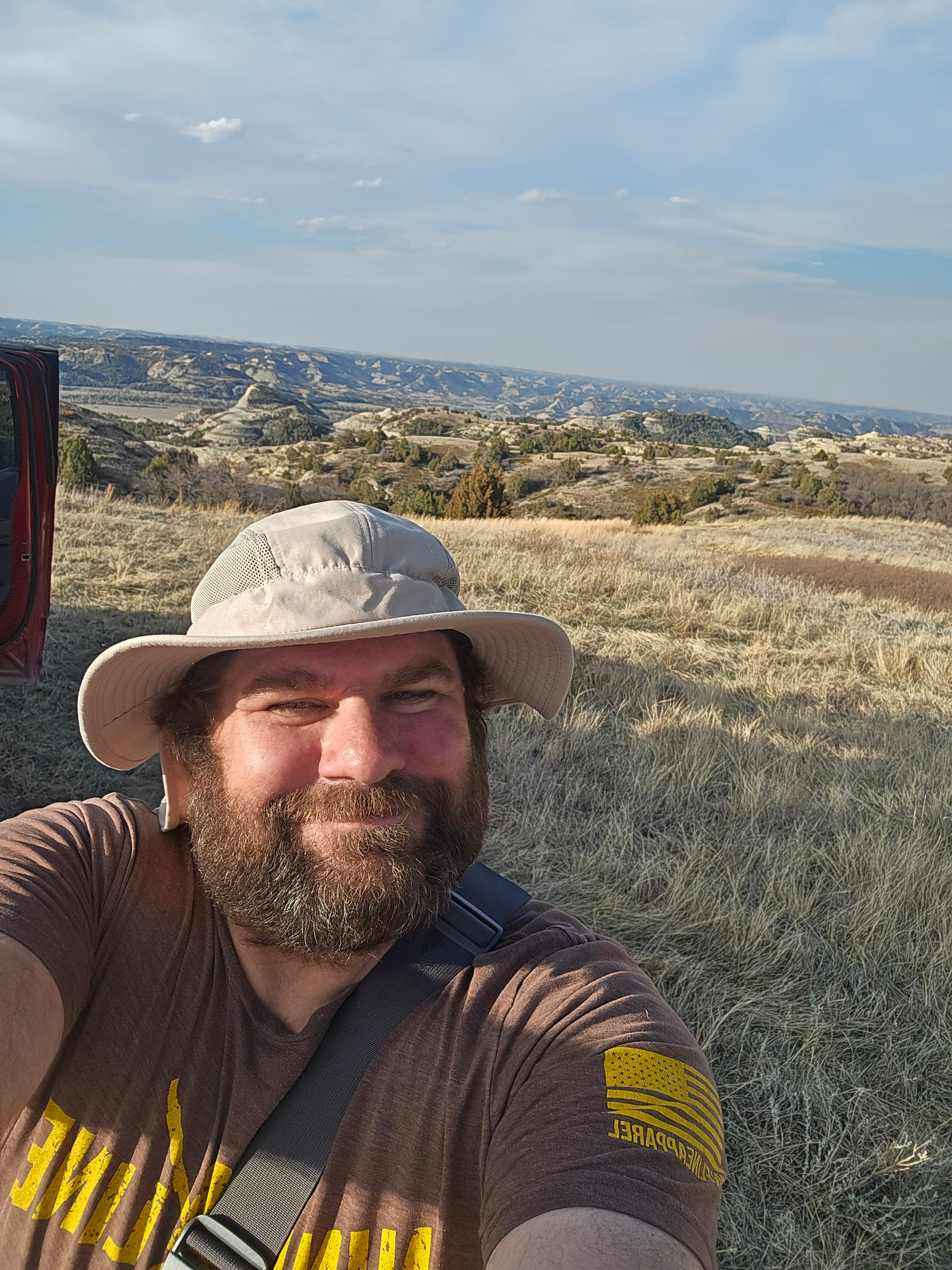
90 contacts were made.